
Front Range winter air is desert-dry. What a whole-home humidifier does for comfort and heating costs, the three types compared, and the upkeep they need.
Every winter the same list shows up in Front Range houses: static shocks off every doorknob, gaps opening in wood floors and trim, sinuses and skin that never quite settle down, houseplants sulking, guitars and pianos drifting out of tune. It's all one problem. Cold outdoor air carries very little moisture, and once the furnace heats it, indoor relative humidity can fall well below the comfortable 30 to 40 percent range. Colorado air is dry to begin with; heating season turns the inside of your house into a desert.
Moisture changes how a temperature feels on your skin. Air at the same thermostat setting feels warmer with some humidity in it, which is why a dry winter house can feel colder than the thermostat says it should. A whole-home humidifier puts that to work: homes with one often sit comfortably a degree or two lower than they used to, at the same felt warmth. Every degree you don't have to heat, all season long, is real heating savings — not a windfall, but a steady discount on top of the comfort you actually bought the thing for.
A bypass humidifier is the simplest and most common. It mounts on the ductwork and borrows the furnace's own airflow, routed through a short bypass duct, to carry moisture off a wet panel and into the air stream. Fewest parts, least to go wrong, lowest output of the three.
A fan-powered humidifier adds its own small fan, so it skips the bypass duct and puts out more moisture from a similar footprint. A steam humidifier makes steam directly with an electric element and injects it into the airflow — the most output and the most precise control of the three, and the highest cost.
Which one fits isn't a question of better or worse. It comes down to your furnace, the space around it, and your water quality — and that last one matters more along the Front Range than most people expect.
A humidifier is a machine that evaporates hard water all winter, and Front Range water is hard. Every gallon that evaporates leaves its minerals behind, on the water panel and inside the cabinet. That panel — the pad the water trickles across — has to be replaced at least once a year, and the unit cleaned, or you haven't installed a humidifier so much as built a scale farm on your ductwork: a crusted panel that stopped wicking, a clogged drain, and output that quietly fell to nothing a season ago.
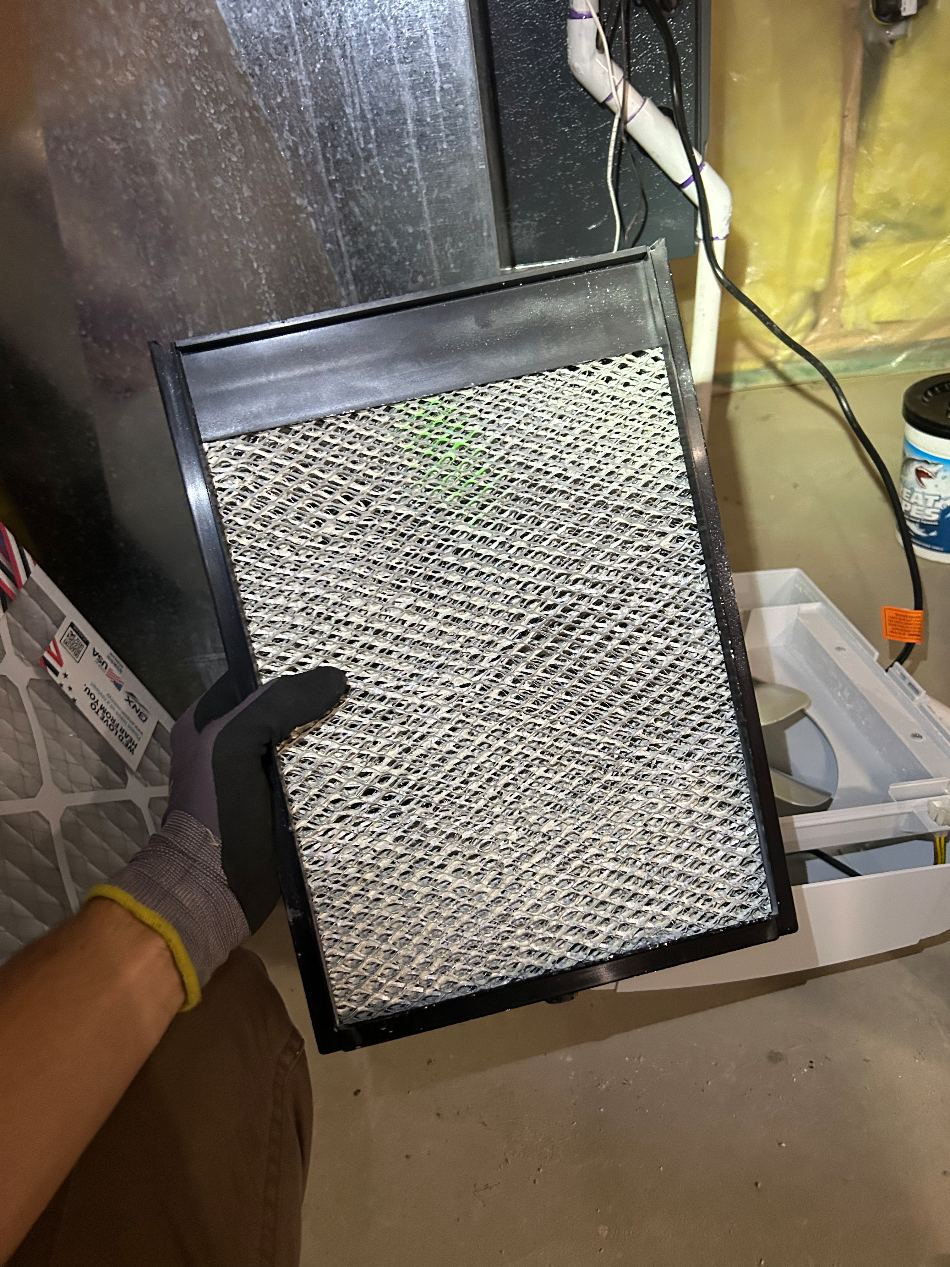
With our water this part is non-negotiable, and it's cheap insurance besides — a fresh panel each fall keeps output where it was designed to be. The fall furnace visit is the natural time to handle it, since swapping the panel while the heat is being tuned up means one trip instead of two. If you're on our maintenance plan ($168/yr for the spring and fall visits), that's exactly the kind of thing to have done while we're already standing at the furnace.
We install and service all three types — bypass, fan-powered, and steam. Done right, the unit is sized to the house, tied into the furnace so it runs only when it should, and set up so the humidistat does the thinking instead of you. You set the target once in the fall, and the house holds it without another thought from you.
If dry air is one piece of a bigger comfort or air question in your house — smoke season, dust, allergies — start with our indoor air quality page, or head to heating services for the furnace side of things. Related reading: humidity also changes where you can afford to set the thermostat — see our guide to winter thermostat settings.
Book online in about a minute — pick the time that works for you.