
Where to set your thermostat in a Colorado winter, which setbacks actually save money, and why heat pump owners need to play by different rules.
The standard efficiency baseline for winter is 68°F while you're home and awake. Nothing magical happens at 68 — it's simply the accepted compromise between comfort in normal indoor clothes and what the furnace costs to hold, and each degree you set below it saves roughly 1 to 3 percent on heating. If 68 sounds cold, don't jump straight to it. Come down from your current setting one degree at a time and give everyone a few days to adjust before trying the next.
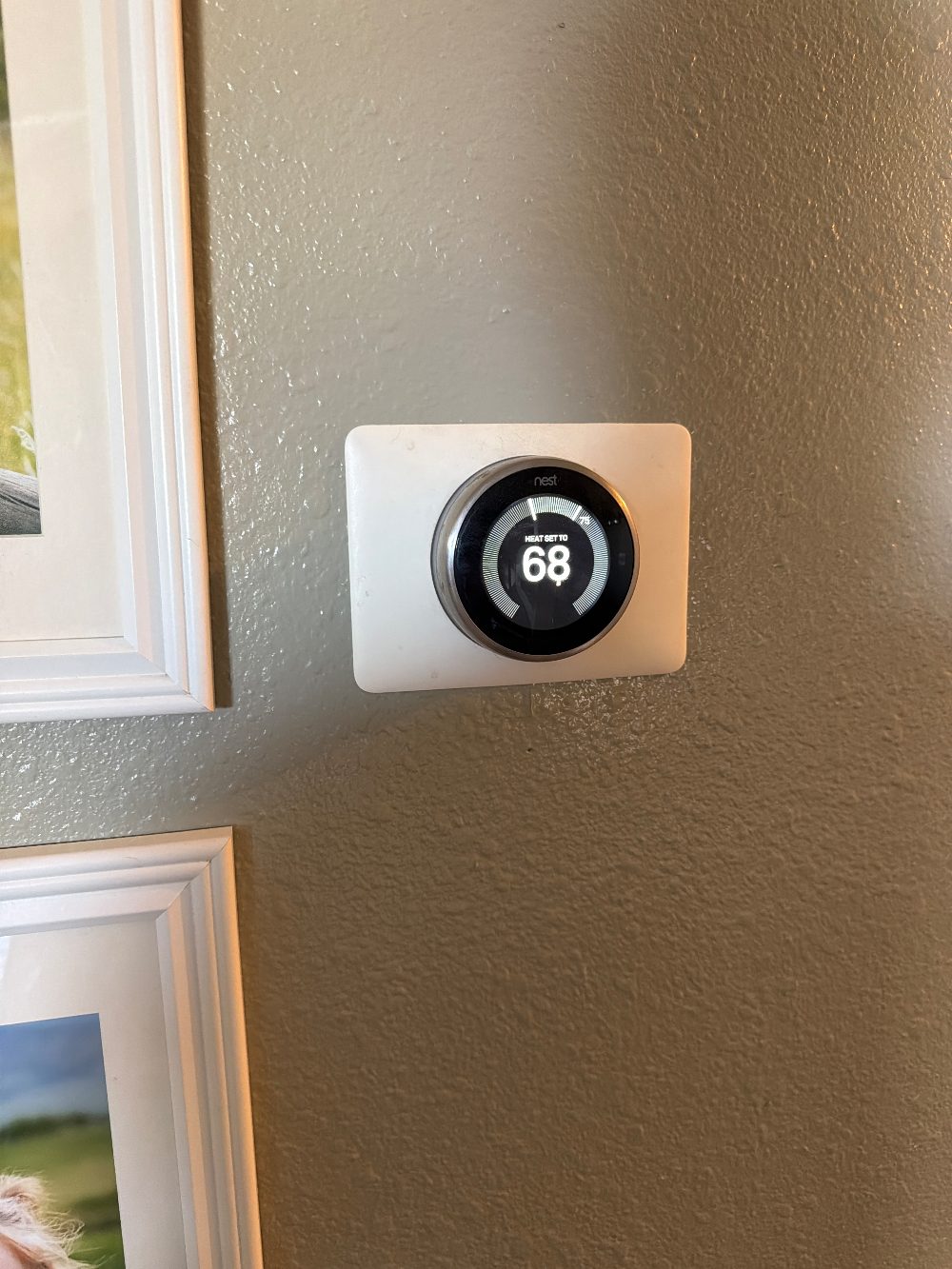
The bigger savings come from setbacks — letting the house cool down when nobody needs it warm. The Department of Energy's number: setting back 7 to 10 degrees for 8 hours a day saves up to about 10 percent a year on heating. Colorado hands you a perfect setback window every night. Our winter nights get properly cold, and holding 68 at three in the morning buys nothing but a bigger bill. Drop the setpoint 7 to 10 degrees overnight, add a blanket, and let the schedule bring the house back up before your alarm.
If the house sits empty on weekdays, the workday is your second window — set back when the last person leaves and recover before the first one gets home. You shouldn't have to remember any of this, which is the point of the scheduling section below.
One important caveat before you program a deep setback: if your home heats with a heat pump, big setbacks can backfire. A heat pump makes heat gently and steadily. Ask it to lift the house 8 or 10 degrees on a cold morning and many systems call in their electric backup heat strips to catch up — and those strips burn electricity far faster than the heat pump itself. A deep setback can hand back everything it saved during that one morning recovery.
With a heat pump, keep setbacks small — 2 to 3 degrees — or use a smart thermostat that's heat-pump-aware and knows how to recover gradually without waking the backup heat. If you're not sure how your system behaves on recovery, that's worth asking about; more on how this equipment works is on our heat pumps page.
Humidity is the quiet variable in winter comfort. Air with some moisture in it feels warmer than bone-dry air at the same thermostat number, and Front Range winter air is about as dry as it gets. That's why a whole-home humidifier changes the equation: many homes with one end up sitting comfortably a degree or two lower than they used to, at the same felt warmth — and every one of those degrees is savings that runs all season. We cover the types and the maintenance they actually need in our whole-home humidifier guide; the broader picture is on our indoor air quality page.
The best thermostat setting is the one that happens without you. Nobody remembers to turn the heat down at ten every night, and nobody wants to wake up cold because they did. A programmable or smart thermostat runs the setbacks on a schedule, recovers before you're up, and the heat-pump-aware models do it without tripping the backup heat. We install and configure them, including building a schedule around how your household actually runs.
One honest caveat: a thermostat can't fix a mechanical problem. If the furnace runs and runs and the house never reaches the setpoint, the issue is the equipment or the ductwork — undersized returns, a struggling furnace — and no schedule will change that. That's a service call, not a settings problem. Our diagnostic is $85, and it beats another winter of guessing; start at our heating services page.
Book online in about a minute — pick the time that works for you.