
The blower runs, the air never warms up, and the furnace keeps trying. A worn-out ignitor is one of the most common reasons a furnace quits.
Most gas furnaces installed in the last few decades don't use a standing pilot light. When your thermostat calls for heat, a small ceramic part called a hot surface ignitor glows orange-hot, the gas valve opens, and the burners light off that glow. If you've ever watched a furnace start and seen a bright orange glow through the sight glass just before the flames, that's the part. It works at the start of every heating cycle, all winter long, and it's a consumable — designed to wear out in normal service, typically lasting three to seven years depending on how hard your furnace runs. If yours is eight or ten winters old and still on its original ignitor, it's on borrowed time.
Ignitor failure has a recognizable signature. The blower runs and air moves through the house, but the air never warms up, because the burners never light. You might hear the clicks of the startup sequence and then nothing — no light-off, none of the familiar whoosh of the burners catching. Most furnaces will retry the sequence a few times, then lock themselves out and stop trying altogether. Cycling the power can clear the lockout and buy one more attempt, but a cracked ignitor doesn't heal, and the furnace lands right back where it was. Note the difference from a furnace that makes heat and then goes cold — that pattern usually points elsewhere. With a failed ignitor, there's no heat at any point.
Age does most of the damage. The ceramic element heats to glowing and cools back down thousands of times across its life, and eventually a hairline crack forms — often too fine to see, but enough to stop the glow. Oils from bare-handed handling shorten the life of a new ignitor too, which is why techs hold one by its base and never touch the element. A power surge can finish off a part that was already weakening. Cold snaps are when ignitors tend to die, for the simple reason that cold snaps are when they work the hardest. None of this says anything bad about your furnace. The ignitor is simply the piece that absorbs the wear.
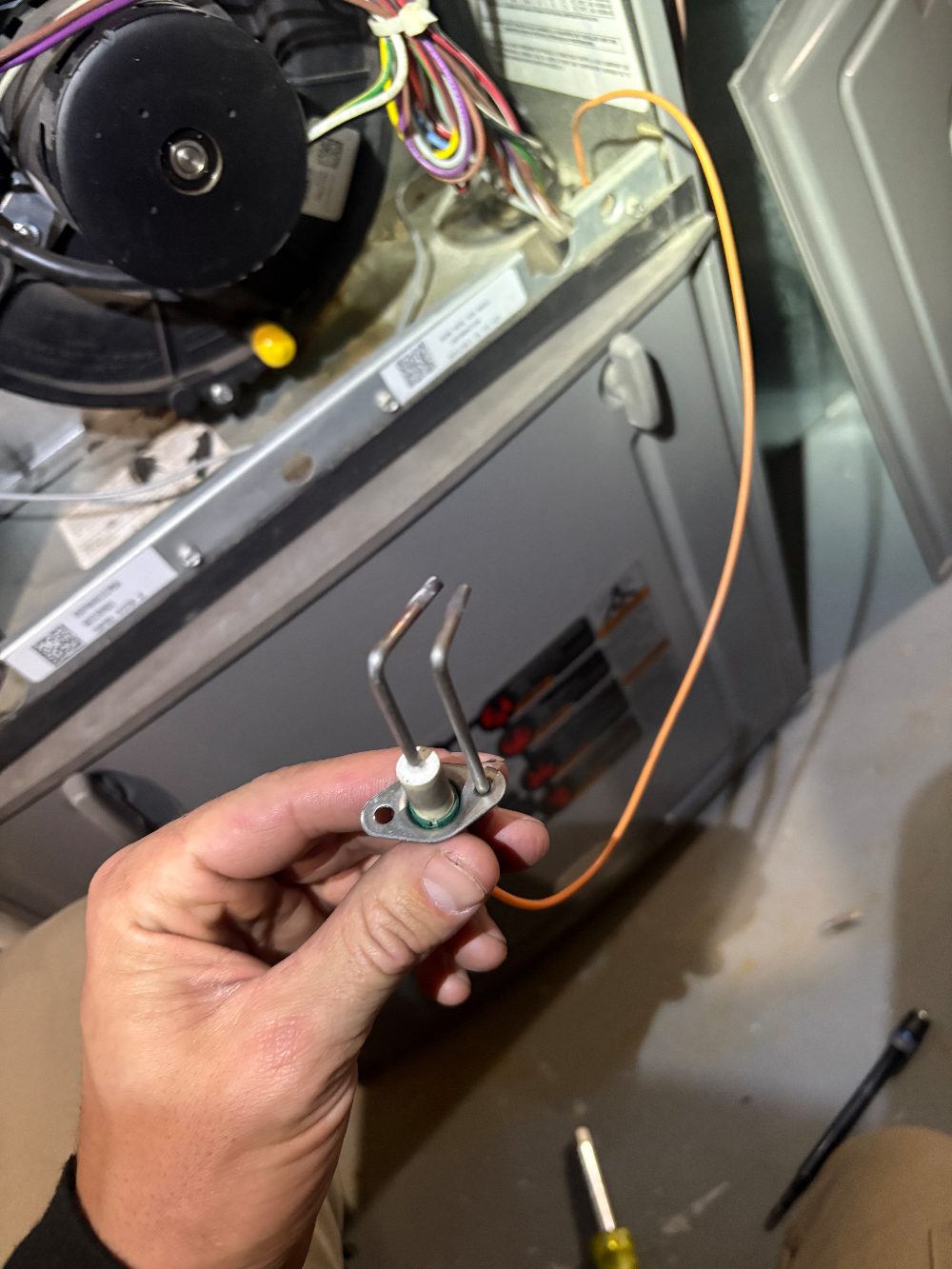
The part itself is inexpensive, and ignitor replacement is one of the more affordable furnace repairs we do. The step that matters is confirming the diagnosis first. Our $85 diagnostic verifies that the ignitor is actually the problem, because a weak ignitor can mask a gas-valve or flame-sensor issue — replace the part without testing the rest of the ignition system and you can end up with a second no-heat morning a week later. Ignitor, flame sensor, and gas valve problems all look the same from the living room, and they're very different repairs, which is exactly why we test before we replace. Once we know the cause, we quote the exact repair before touching anything, so the number you approve is the number you pay. As a real-world benchmark: a complete ignitor replacement with us — diagnosis, part, and labor — typically totals $400–$500.
An ignitor looks like a simple swap, and hardware stores sell universal replacements, so the question comes up a lot. We'd still tell you not to do this one yourself. A furnace is a gas appliance, and the work happens right at the gas valve and burner assembly. Universal ignitors also come in different voltages, and installing the wrong one can damage the furnace's control board — turning a small repair into a much bigger one. If the blower is running and the heat isn't, our heating services page covers how we handle it, and our guide to a furnace blowing cold air walks through the other causes worth ruling out first.
Book online in about a minute — pick the time that works for you.