
Cold air from the vents in the middle of winter usually has an explanation. Here are the causes, in the order worth checking.
Before you assume anything is broken, look at the fan setting on your thermostat. If the fan is set to On, the blower runs around the clock — including between heating cycles, when there's no flame and nothing warming the air. What comes out of the vents is room-temperature air, and moving air feels cold on your skin, especially in January. Switch the fan to Auto and the blower will only run while the furnace is actually making heat. This one setting explains a surprising share of cold-air complaints, and it costs nothing to rule out.
The first air of a heating cycle is often cool, and on newer equipment that's by design. High-efficiency furnaces often start the blower before the burners have fully heated the heat exchanger, so the opening stretch of each cycle moves air that hasn't warmed up yet. If the air turns warm within a minute or two and stays warm until the thermostat is satisfied, nothing is wrong. The time to pay attention is when the air never warms up at all, or warms up and then goes cold partway through the cycle.
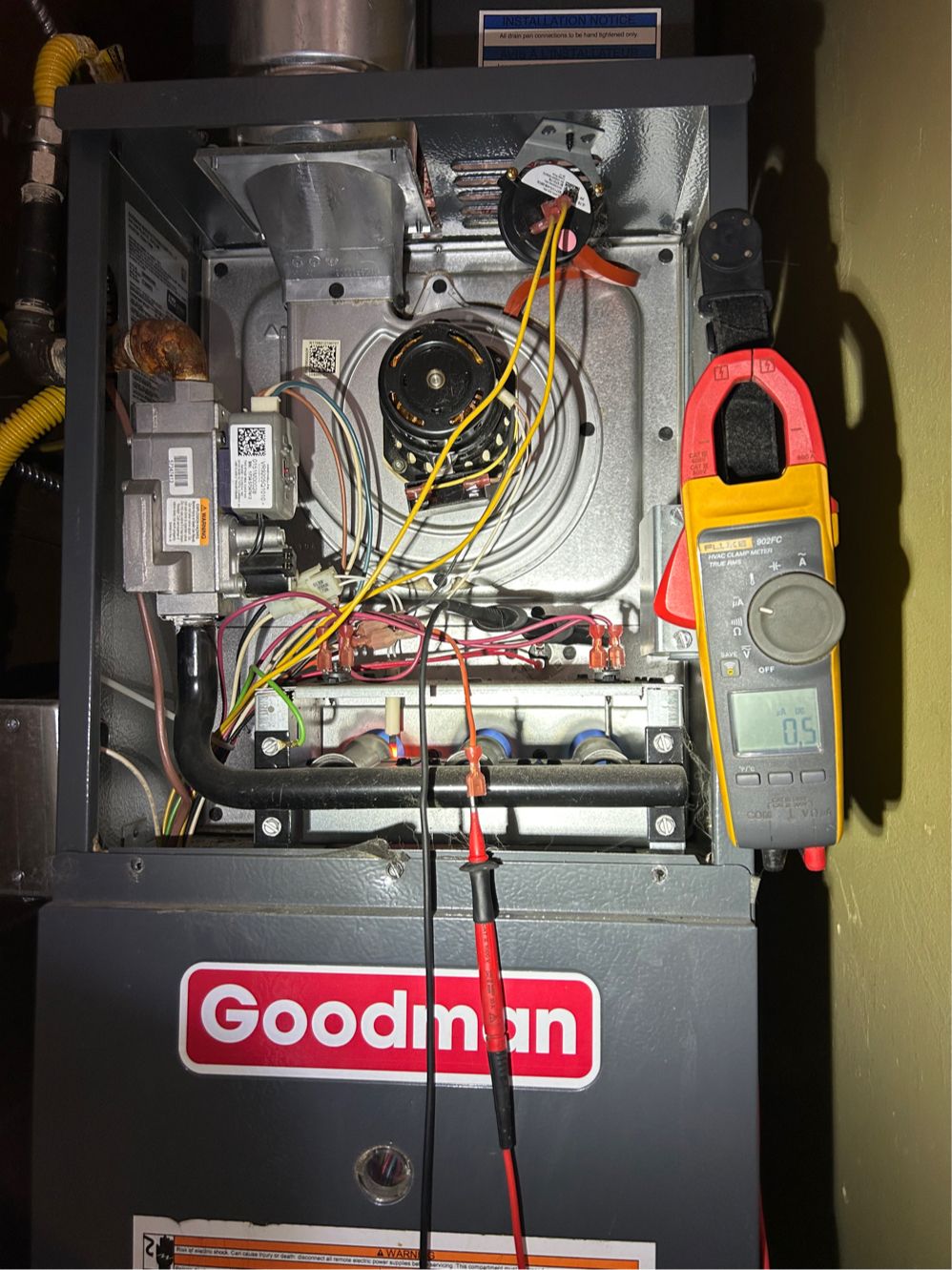
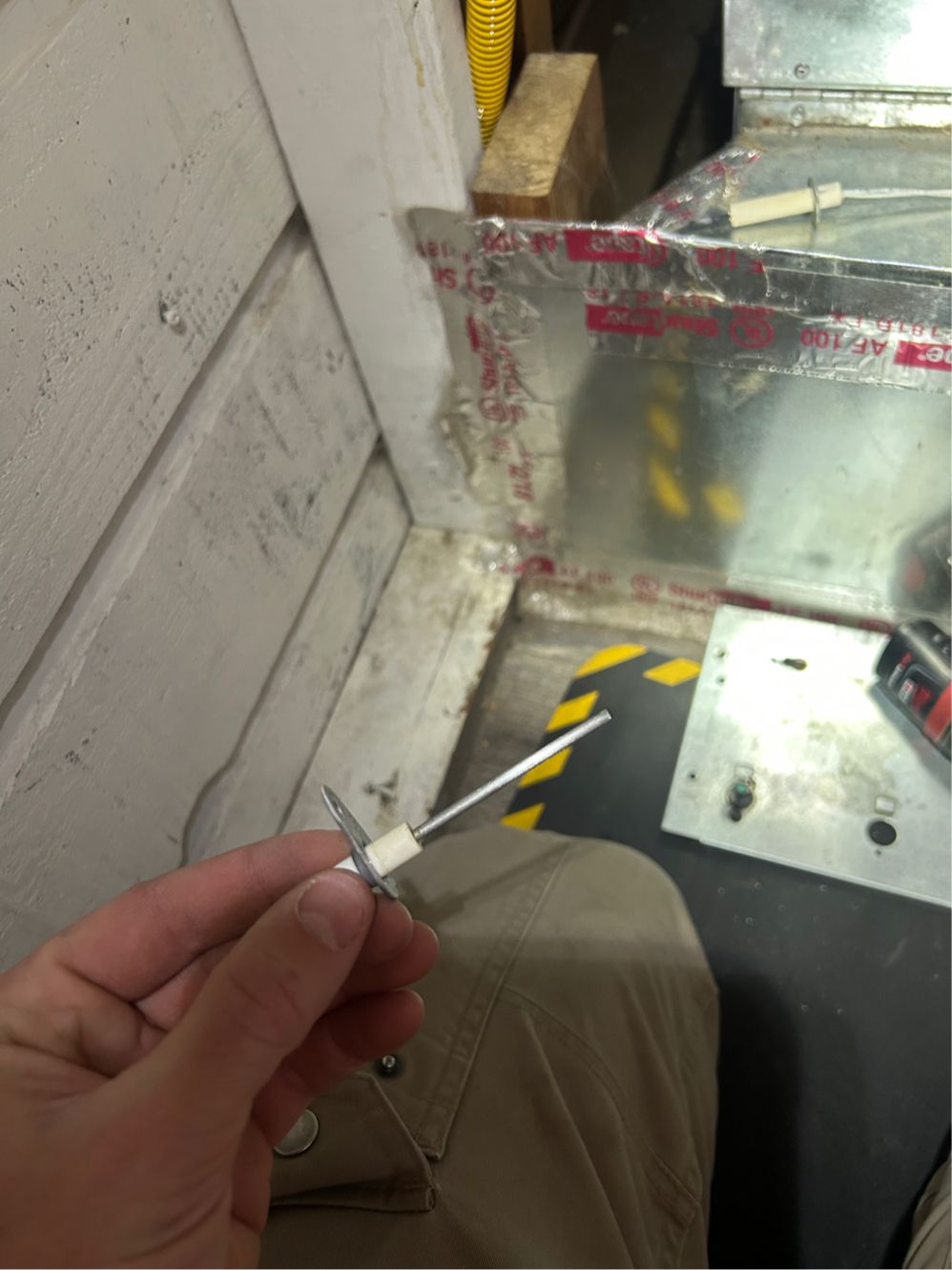
If the furnace makes heat for a short stretch and then blows cold, over and over, a dirty flame sensor is the most common cause. The sensor is a thin metal rod that confirms the burners actually lit. When it's coated with buildup, the control board can't verify the flame, so it shuts the gas off within seconds as a safety measure. The burners light, the air starts to warm, the flame drops out, and the blower keeps pushing air that gets colder by the minute until the next attempt. Cleaning the sensor is a quick professional fix, and it's a standard part of every heating tune-up we do.
A clogged filter chokes off the airflow that's supposed to carry heat out of the furnace. The heat exchanger overheats, and a safety device called the limit switch cuts the burners while leaving the blower running cold to protect the exchanger — so the vents blow cool air until things settle down and the furnace tries again. Replace the filter and see if the pattern stops. If it comes back even with a clean filter, something else is restricting airflow, and that calls for a proper diagnosis rather than another round of resets.
There's a difference between a furnace blowing cold air and a furnace making no heat whatsoever. If the burners never light — a failed ignitor, or on older equipment a pilot that won't stay lit — the blower may still move air through the house, but it will never warm up. That's an ignition failure, and it's a repair visit rather than a homeowner fix. We cover the most common version in our guide to furnace ignitor failure.
Sometimes the furnace is doing everything right and the heat just isn't arriving. Ducts that run through an unheated attic or crawlspace leak warm air out of every open seam and loose joint, dumping heat into spaces you never meant to warm. By the time the air reaches the far bedrooms it's lukewarm at best, even though the air leaving the furnace is plenty hot. If one end of the house runs cold while the furnace itself checks out fine, the ductwork deserves a look.
Two patterns are worth a professional visit instead of more troubleshooting: repeated heat-then-cold cycling after you've already changed the filter, and any burner lockout — the furnace trying to light several times, then shutting itself down. Both are the furnace protecting itself from a problem that won't clear on its own. Our heating services page covers how we handle furnace repairs, and if your furnace is starting and stopping in short bursts, our guide to furnace short cycling is the next thing to read.
Book online in about a minute — pick the time that works for you.