
If the outdoor unit hums but won't start on a hot afternoon, the usual suspect is a part the size of a soda can.
Inside your outdoor AC unit is a part that looks like a small metal can: the run capacitor. It stores an electrical charge that helps the compressor and the fan motors start and keep running smoothly. Those motors lean on that stored charge every time the system fires up, and without a healthy capacitor behind them, motors that are otherwise perfectly fine simply can't get going. You'll usually find it wired to both the compressor and the condenser fan motor, which is why one bad part can take down the whole outdoor unit. That's why a failed capacitor imitates a dead air conditioner so convincingly — and why the actual fix is often much smaller than the symptoms suggest.
The classic sign is an AC that hums but won't start. There are variations: the outdoor fan sits still even though the unit sounds like it's trying, the breaker trips, or the unit clicks over and over as it attempts to start. Sometimes the indoor blower keeps running while all this happens, so air still moves through the vents — it just isn't cold, because the compressor outside never started.
One safety note before you walk out to look. Capacitors hold a charge even when the power is off — storing charge is the whole job — so don't open the service panel, and don't poke the fan with a stick to help it spin up, whatever the internet suggests. Testing and discharging a capacitor is a technician's controlled procedure with the right tools, not a homeowner fix. Everything on the list above can be seen or heard without opening anything, and that's as far as it should go.
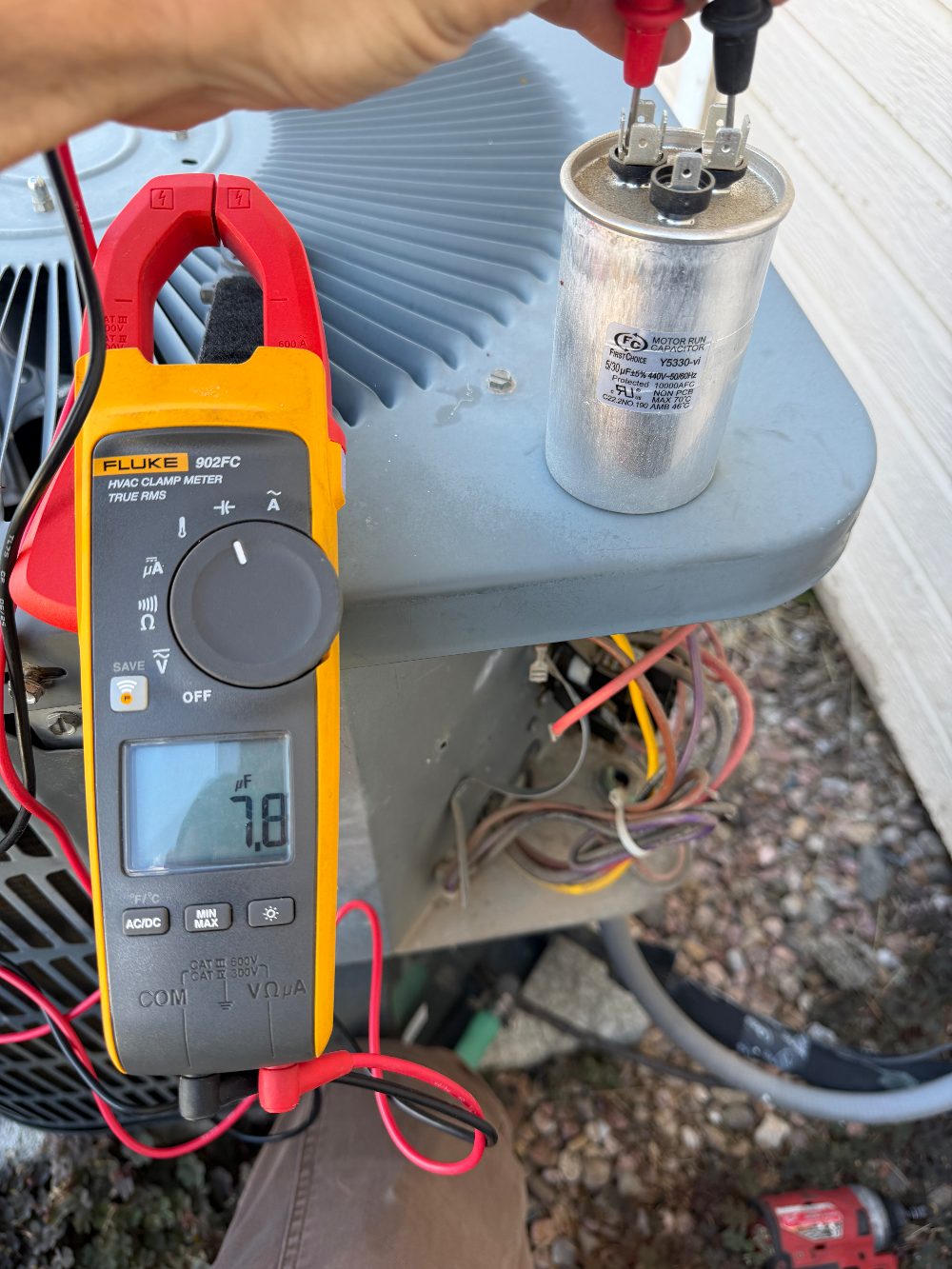
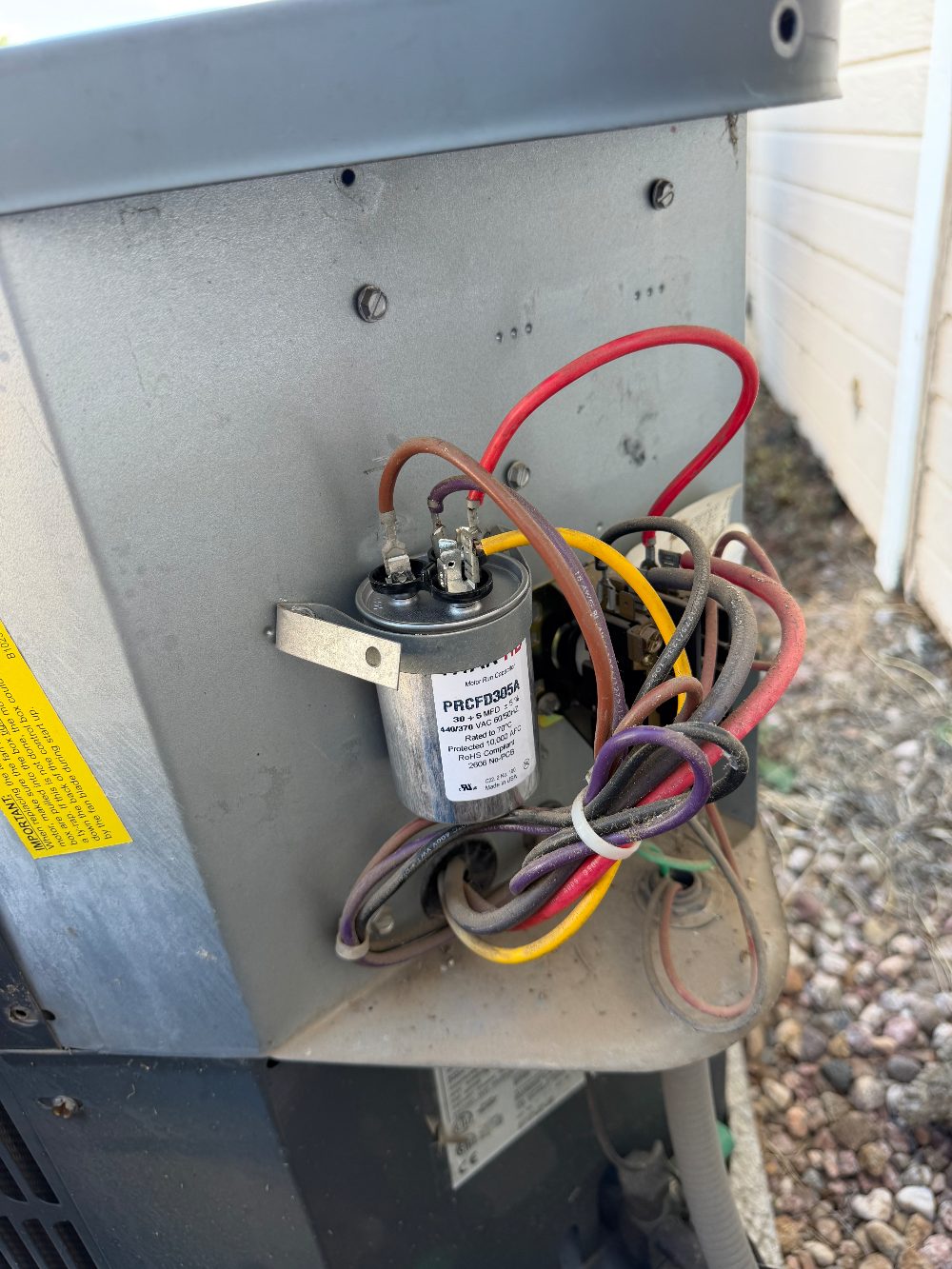
Capacitors degrade with heat, and the run capacitor lives in about the worst spot for it: inside the condenser cabinet, where a Front Range summer afternoon can push temperatures past 100 degrees while the unit works. Season after season of that slowly weakens the capacitor, year by year, until one hot day it can't deliver enough charge to start the compressor. There's no maintenance step that makes a capacitor last forever — they drift out of tolerance with heat and time, and the only real question is whether anyone is checking. It's the single most common AC repair on our trucks, and the failures cluster in exactly the stretch of weather when you need cooling most.
A run capacitor is an inexpensive part, and swapping one is among the cheaper AC repairs there is. So why bother catching it early? Because a weakening capacitor doesn't fail politely. On its way down it strains the compressor — the most expensive part in the entire system — by making every start harder than it should be. Paying a little attention to the cheap part is how you protect the expensive one.
That's exactly why our $149 spring tune-up tests the capacitor's microfarads against the rating printed on its side. A capacitor drifting out of spec shows up in that measurement long before the unit quits, and when one tests weak we show you the reading next to the spec — the call is yours. Replacing it on a mild spring day beats losing your cooling in the first hot week of July. If you'd rather not think about capacitors at all, our $168-a-year maintenance plan includes that spring tune-up every year, plus the fall heating visit.
If your AC is doing any of the things on this list right now, our AC services page covers how we handle repairs. And if the system runs but the house never quite cools down, start with our guide to an AC that's running but not cooling.
Book online in about a minute — pick the time that works for you.